A public, proof based rating for environmental conferences and events, built on the science of climate solutions. Every point needs public proof, and every point names the climate solution it supports.
Events grow ring by ring, from Planted to Old Growth.
Why this rating exists
Plan greener. Prove it. Leave something better behind.
The Environmental Integrity Rating was designed to help organizers create better environmental, sustainability and conservation events. It works like a coach, not a judge: free tools, a clear checklist and a score that grows with every improvement, so any gathering, from a meeting to an international conference, can match its actions to its message.
Plan greener
Step by step guidance on travel, food, energy, venues and waste, the choices that shape most of an event’s footprint.
Prove it
Every point is backed by public proof, so attendees, sponsors and partners can see exactly what an event delivered.
Leave something better
Go beyond cutting the footprint by funding results that last: reefs, forests, solar and pollinator gardens.
Our mission
To help every environmental, sustainability and conservation event practice what it preaches, by giving organizers simple, science based tools to cut their footprint, prove their progress in public, and leave a lasting benefit for people and the planet.
Created by Steve Bender, Chairman of the United States Green Chamber of Commerce. Event organizers around the globe kept reaching out to Steve for advice on making their gatherings greener, drawing on more than five decades of service in leadership roles with many organizations in the environmental field. Steve grew up on a Kansas beef farm that practiced regenerative methods, including silvopasture, before anyone had a name for them. Speaking at conferences and conventions around the world, he saw how much good events could do, and how much they could waste. Steve has worked on the rating for decades, designing and testing it with professionals and organizations to make it fair, practical and easy for organizers to use.
Points go where the most emissions can be avoided or removed, following the best published research on climate solutions. When two rules conflict, the one that better matches the science wins. When that science is updated, the rating is reviewed within the year and every change is logged in public.
For most conferences, attendee travel is the largest share of the footprint, so Travel carries 20 of 100 points. Plant rich diets and reducing food waste are among the highest impact climate solutions, so plant based food earns full Food points. Climate solutions research does not count offsets as a climate solution, so credits come last and never replace real cuts.
Every event leaves a footprint. The best ones leave something better behind.
The Rotary Reefs booth at EarthX 2023.
How it started: one tour, many audiences
The rating grew from a simple idea: instead of many small events, bring audiences together in one place, so fewer people travel and every gathering does more good.
One RV, many clubs, no new event
In January 2025, Steve drove his RV, which gets about 17 miles per gallon, from Southern California up the West Coast to Vancouver Island in Canada, speaking at Rotary clubs along the way. Instead of asking people to travel to a new conference, he went to clubs that already meet every week. Each host club was asked to invite every member interested in environmental projects, along with environmental chairs and President-Elects from nearby clubs, so one regular meeting became a regional gathering. One speaker traveled to many existing meetings, instead of many people traveling to one new event.
Practicing what we preached at every meeting
No single use plastics: refillable water pitchers and reusable cups instead of plastic bottles, and real plates and cutlery.
A better plate: plant forward menus, with vegetables, grains and beans at the center and little or no red meat.
No food waste: meals ordered to the number of people actually attending, smaller portions with seconds available, and leftovers shared with members or donated.
Scraps out of the landfill: food scraps composted where the venue allowed it.
These simple habits became the heart of the rating's Food and Venue categories.
The honest footprint of the tour: about 3,000 miles round trip at 17 miles per gallon is roughly 175 gallons of fuel, or about 1.6 tonnes of CO₂. That is about the same as one passenger's round trip flight from Los Angeles to Europe, shared across every club and member reached.
Planning the Big West Zone Water Summit, Steve Bender proposed a hybrid model so Rotarians could learn from experts without the expense or carbon footprint of travel.
January 2025
As ESRAG chair for Western North America, Steve drove his RV from Southern California to Canada on a West Coast speaking tour, and asked host clubs with large venues to invite the environmental chairs and President-Elects from clubs across their district, so many audiences could meet in one place.
January 11, 2025
The tour's first stop: the Los Altos Rotary Club's first Climate Action Summit, which brought together more than 125 people from Rotary clubs, businesses and community groups.
January 12 to 25, 2025
Sacramento, San Mateo and Novato in California, the Bellevue Rotary Club in Washington, and as far north as Sidney by the Sea on Vancouver Island, at the Charlie White Theatre.
April 2026
The Environmental Xperience at EarthX in Dallas became the rating's test event, with every speaker's travel counted and covered.
December 1, 2026
The Environmental Integrity Rating launches.
January 30, 2027
The 2027 Climate Action Summit in Los Altos has been invited to be the first Rotary environmental conference rated.
How it works
Every event gets two scores, written like 82 + 12. Tiers come from the first number only. If it is not public, it does not score.
100
A great event
Up to 100 points across six categories, rated within 90 days of the event.
+20
Create Lasting Impact
Up to 20 bonus points at a six month follow up, for projects that were delivered with a measured result.
70s
A good first year
Good events should score well but not perfectly. A strong first or second year event should land in the 70s or low 80s.
Required items
A named sustainability lead with authority over venue, catering and vendors. From year one.
A public report against the standard within 90 days. From year one.
Attendees see the expected carbon footprint at registration. From year two.
No plastic water bottles given out or sold anywhere. From year two.
Organizer toolkit
Six free tools to plan a better event and earn every point. Your answers are saved in this browser only, never sent anywhere. Ready for a formal, public rating? Submit your event at 47817.org.
Points within each category are weighted by climate impact: the actions that avoid or remove the most emissions earn the most.
Looking for more ideas? Browse projects to showcase in the 47817.org Project Library, sorted by Rotary's Areas of Focus, the pillars of peace and the UN goals. Costs are typical ranges; confirm with the project partner. All bonus points count inside the +20 cap.
Fill in your event once. Eight ready to send documents fill themselves in, and you can copy each one.
Paste one public link per item as you go. If it is not public, it does not score.
Item
Proof that counts
Link
Status
Six categories, 100 points
Each bar is sized by its points. Select a category to see what earns them.
Every item, mapped to a climate solution
Strong means the item directly reduces emissions as climate solutions research measures them. Partial means it helps but is indirect or small. New marks items added to align the rating with climate science.
Category
Item
Climate solution or principle
Alignment
Carbon estimated in minutes, credits bought in advance
Organizers estimate the event's footprint from simple totals, then retire carbon credits before the event, so the commitment is public and can't be quietly dropped. No level ever asks for guest names, addresses or ZIP codes.
Basic
About 5 minutes
Expected headcount and the event's reach: local, regional, national or international. The default is set high on purpose.
1 Travel point
Better
About 15 minutes
Headcount by state or country, a summary report most ticketing platforms already produce. Usually lowers the estimate and the cost of credits.
2 Travel points
Better plus speakers
About 10 more minutes
Speaker home cities, which organizers already collect to book travel.
3 Travel points
Travel carbon for each group = 2 × one way distance (km) × emission factor for the travel mode (kg CO₂e per km)
Emission factors come from one published source used by every event, such as the UK government's greenhouse gas conversion factors or the US EPA's, and the source is named on the scorecard. Flights use separate factors for short and long haul.
The sequence
Instant estimate. The calculator turns the totals into a footprint for travel, hotel nights, food and venue. The average per attendee is shown at registration.
Credits retired before the event. About 30 days out, the organizer retires credits for the estimate plus a 10 percent buffer on a recognized registry (such as Gold Standard, Verra, Climate Action Reserve or American Carbon Registry) and posts the serial numbers.
True up after the event. The 90 day report updates the estimate with the final headcount. If it was short, more credits are retired.
Credits score last
Prepurchased, retired credits with a true up earn up to 2 Honesty points, never Travel, Food or Venue points.
Reductions first
Credits count only if the event published a reduction plan and earned at least half of its Travel points.
Quality over price
Durable removal or credits from proven climate solution projects earn full points. Unregistered credits earn none.
Fund the footprint twice over, and build something that lasts.
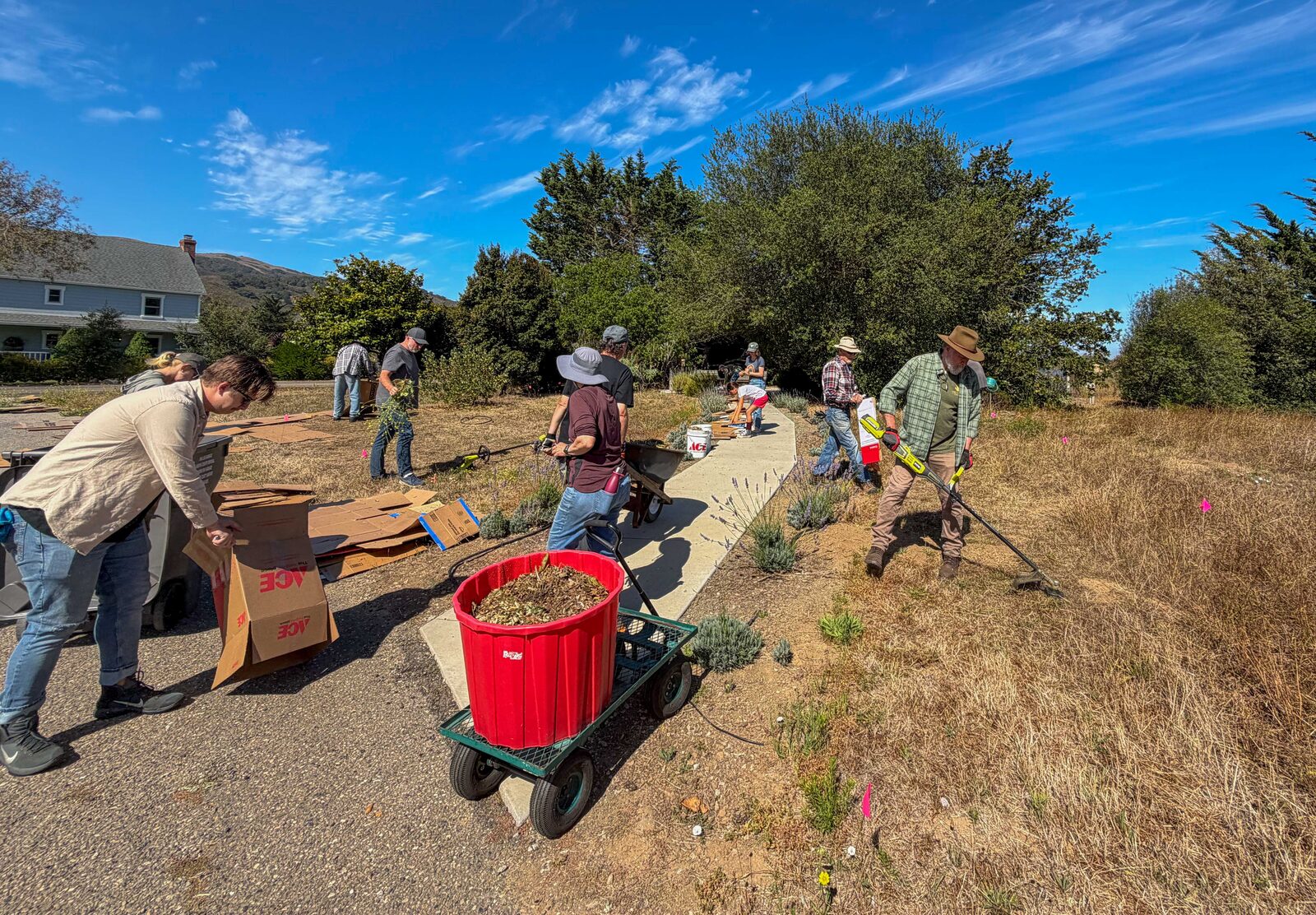
Pollinators are part of the lasting impact events can fund.
Climate Positive: fund two times your footprint, and build something
Events that fund at least two more times their footprint earn a Climate Positive label on their scorecard. Points stay inside the +20 bonus, so extra money buys results, never a higher score on its own. Open to events that earned at least half their Travel points and published a reduction plan.
Preferred route
Solar in the host city
+4, and +1
Fund rooftop or community solar for a school, food bank, community center or nonprofit near the venue, sized to produce at least two times the event's footprint over its life. The extra point comes when the host or installer also publishes the result.
Proof: installer statement, photos, and a public monitoring dashboard at six months. Showcase projects on solaroftheamericas.org.
Another local climate solution project
+4, and +1
Restoration, building efficiency or EV charging for a nonprofit near the host city. The extra point comes when a partner publishes the measured result.
Proof: partner report with the result at six months.
High quality credits
+2
Retire credits for two more times the footprint from durable carbon removal or a proven climate solution project.
Proof: registry retirement serial numbers.
Solar is preferred because it is a proven climate solution, keeps cutting emissions for 25 years or more, the community can see it, and a monitoring dashboard makes verification almost instant.
Sponsor a forest or a reef: up to 2 points each
Events that go further can sponsor an additional forest of at least 1 acre restored (about 0.4 hectares) with native species, with survival shown in the six month photos, and a Rotary Reef or another reef or fish habitat covering at least 100 square feet (about 9 square meters), as part of a larger restoration site that the partner monitors. A reef can also be sponsored with a donation of at least $5,000 to a verified reef restoration organization that confirms the donation funds at least 100 square feet. Each earns 1 extra point when it is entered on 47817.org.
A second point for double the result. Each earns a second point when the result confirmed at six months is at least double the minimum: 2 acres of forest restored, or 200 square feet of reef or fish habitat. Points follow results, not dollars, as climate solutions research measures them. All count inside the +20 bonus cap.
Reef Champion and Forest Champion. Events that give $10,000 or more to a verified restoration organization, or whose project is confirmed at six months at 5 acres of forest or 500 square feet of reef or more, earn a Champion label on their scorecard. It is public recognition, not points, so no score is ever bought.
Each entry shows the project's location, the partner doing the work (such as a local Rotary club), dated photos at the start and at six months, and the result (such as trees planted or reef area restored). The partner confirms the entry. For a reef donation, the entry shows the donation receipt and the organization's written confirmation of the reef work it funded; a verified organization is a registered nonprofit whose main work is reef restoration and that publishes its results. Projects that are not entered are welcome, but they do not score.
Pollinators and agrivoltaics
Solar with pollinator habitat. Native flowering plants grow under and around the panels. It qualifies as the solar route for Climate Positive, with Pollinators Without Borders as the partner that publishes the result.
Agrivoltaics. Panels are raised so crops grow or sheep graze beneath them, with pollinator plantings between the rows. One piece of land produces clean power, food and habitat, which answers the objection that solar takes farmland.
Pollinator gardens. A garden scores +4 as a Lasting Impact project, plus +1 when Pollinators Without Borders publishes the result. It counts for restoring nature; its carbon effect is small, so on its own it does not count toward Climate Positive.
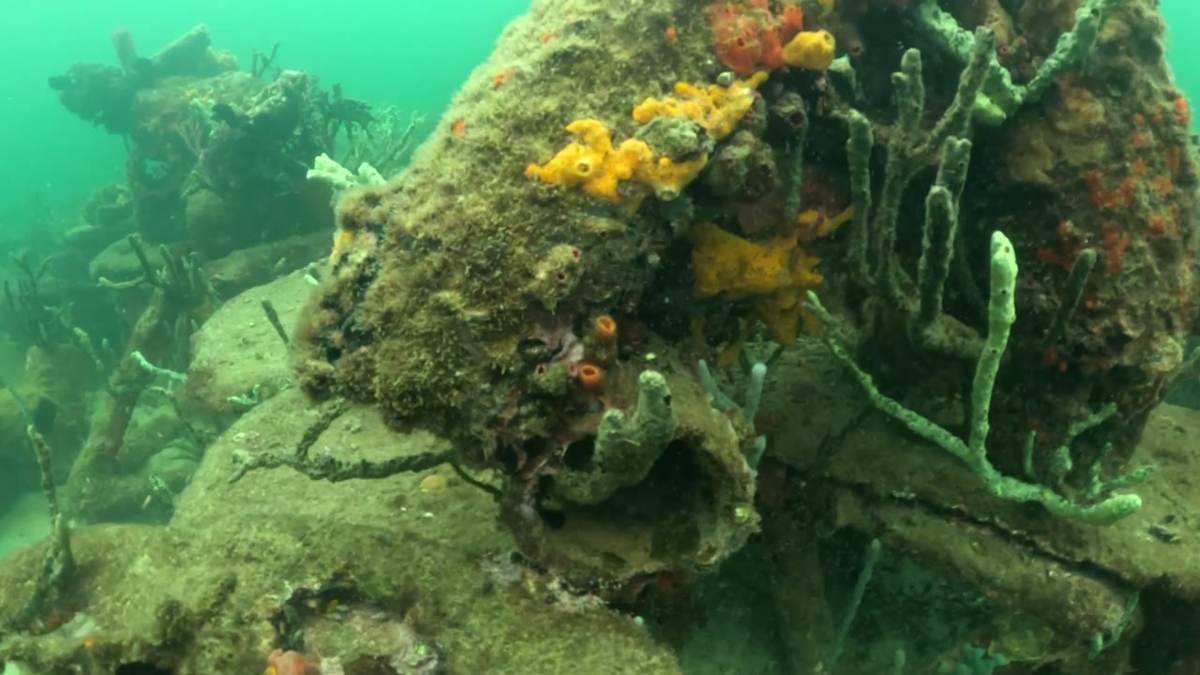
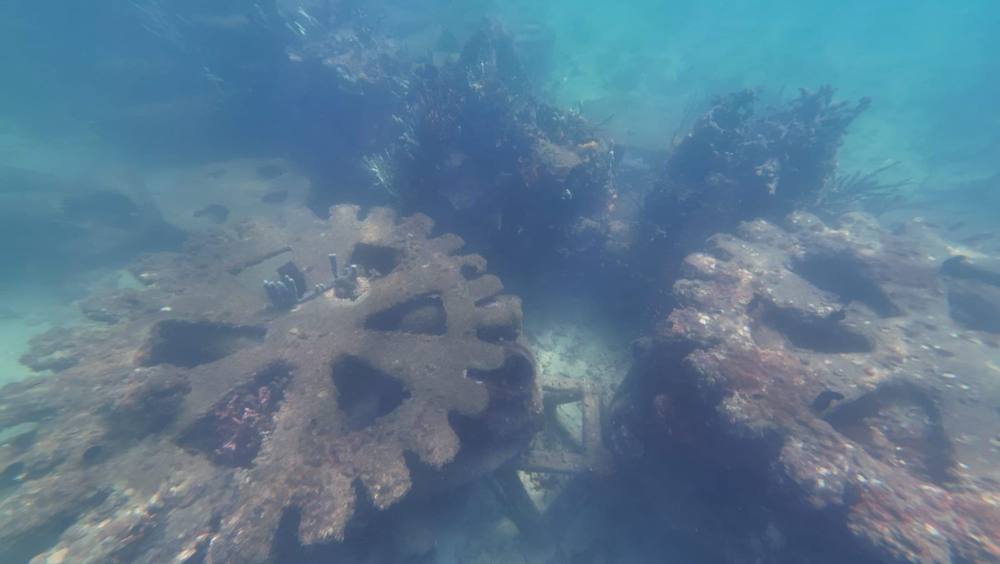
Every Rotary Reef wheel becomes a home for fish and coral.
A Rotary wheel reef module, Bocas del Toro, Panama.
Life below water needs the most help
Life Below Water, UN Sustainable Development Goal 14, is widely reported to be the least funded of the 17 goals. Coral reefs cover a tiny share of the ocean floor yet shelter about a quarter of all marine species. That is why this rating gives reefs their own bonus points and a Reef Champion label.
Sponsor a Rotary Reef
Rotary Reefs restores and repairs coral reefs off the coast of Panama with engineered reef structures, built with Rotary clubs, marine scientists and local communities. Its video on restoring reefs off Panama earned a second place certificate.
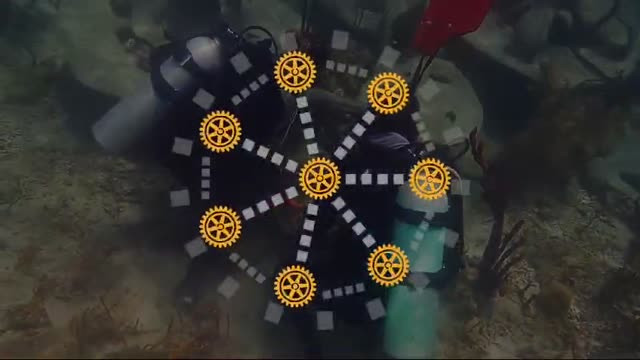
The 2027 Rotary Reef: a reef in the shape of a Rotary wheel
Large 6 foot reef wheels are placed in the shape of a Rotary wheel, with each arm representing one of Rotary's 7 Areas of Focus: peace and conflict resolution, disease prevention and treatment, water and sanitation, maternal and child health, basic education and literacy, economic and community development, and the environment. The finished reef covers about 200 by 200 feet. Between the large wheels sit Mini Rotary Reefs: small "fish hotels" built from a 24 inch Rotary wheel on 6 inch tubes, creating a fish nursery and a lobster motel.
An event that sponsors a Rotary Reef supports SDG 14 directly, gives its attendees a project they can watch grow, and earns reef points once the reef is entered on 47817.org with photos.
+1 point for one Rotary Reefs structure (about 100 square feet), another reef or fish habitat of at least 100 square feet, or a $5,000 donation to a verified reef restoration organization.
+1 more when the result confirmed at six months is at least 200 square feet, such as two Rotary Reefs structures.
Reef Champion label for $10,000 or more, or 500 square feet or more, such as five structures.
SDG 14 credited in the event's 4-7-8-17 alignment.
Reefs score for nature and SDG 14, not for carbon, so they add to an event's climate work rather than replace it. Ocean programs are also supported through the 7 Seas Foundation.
See the reefs
A 6 foot Rotary Reef wheel beside a diver, then the same kind of structure grown over with sponges and coral.Building and placing the wheels, and the Rotary wheel layout of the 2027 reef.Rotary Reef wheels on the seafloor, grown over with sponges and coral.The 2027 layout: large wheels arranged as a Rotary wheel, with Mini Rotary Reefs between them.In one frame, a single structure shows over 100 small fish in one school, with larger fish sheltering inside. Divers report thousands of small fish and hundreds of larger fish on each structure.Sponges and corals growing on a structure, surrounded by clouds of small fish.Fish sheltering inside the wheels, which give protected space an open reef does not.A nurse shark living between two wheels: placed together, wheels shelter larger animals.Rotary Club of San Mateo reef: colorful sponge and coral growth on the wheels.
Rate the projects too: the 4-7-8-17 framework
This rating judges whole events. Its companion, 47817.org, helps organizers pick projects to showcase at their events, and judges those projects using four time-tested lenses. Every Lasting Impact project is entered on 47817.org with dated photos and partner confirmation, and each event's scorecard shows its 4-7-8-17 alignment beside its climate alignment.
4
The Four-Way Test
Is it the truth?
Is it fair to all concerned?
Will it build goodwill and better friendships?
Will it be beneficial to all concerned?
7
Rotary's 7 Areas of Focus
Peace and conflict resolution
Disease prevention and treatment
Water, sanitation and hygiene
Maternal and child health
Basic education and literacy
Community economic development
The environment
8
8 Pillars of Positive Peace
Well functioning government
Sound business environment
Equitable distribution of resources
Acceptance of the rights of others
Good relations with neighbors
Free flow of information
High levels of human capital
Low levels of corruption
17
17 UN Sustainable Development Goals
1No poverty2Zero hunger3Good health and well-being4Quality education5Gender equality6Clean water and sanitation7Affordable and clean energy8Decent work and economic growth9Industry, innovation and infrastructure10Reduced inequalities11Sustainable cities and communities12Responsible consumption and production13Climate action14Life below water15Life on land16Peace, justice and strong institutions17Partnerships for the goals
How the two fit together
Pick a project to showcase: browse projects on 47817.org by the Areas of Focus, peace pillars and goals your audience cares about, or submit your own. Then feature it on stage, in the program and at a booth, so attendees see the good their event is doing and can support it.
Prove the result: the project's 47817.org entry, with photos at the start and at six months and the partner's confirmation, is the proof for Lasting Impact points and the forest and reef points.
Show the whole picture: an event's scorecard shows both how well it cut emissions and how much good its projects do for people and peace. A Rotary Reef, for example, serves the environment, Life below water and economic development for local fishing families.
Why 1 acre of forest and 100 square feet of reef ask for about the same effort. Costs and carbon rates are approximate and vary by location; they will be replaced with real project costs as they are published.
One acre of forest
Trees per acre. 43,560 square feet ÷ 100 square feet per tree (10 foot spacing) = about 435 trees.
Cost, approximate. 435 trees × $1 to $5 each = about $435 to $2,200. With site preparation and care, roughly $500 to $3,000 per acre.
Carbon, approximate. Restored tropical forest absorbs about 3 to 8 tons of CO₂ per acre per year. Over 20 years: 60 to 160 tons.
100 square feet of coral reef
Area. 100 square feet = about 9.3 square meters, about 1/435 of an acre. Reef restoration costs far more per square foot than planting trees.
Corals planted, approximate. Restoration teams often plant about 1 to 4 coral fragments per square meter: 9.3 × 1 to 4 = about 9 to 37 corals.
Cost, approximate. Including nursery growing, diving and follow-up care, roughly $2,000 to $10,000 for 100 square feet.
Survival, approximate. About 60 to 70 percent of planted corals typically survive the first year: of 9 to 37 planted, about 5 to 26 living corals.
Result. Living coral cover and survival, shown in photos at the start and at six months.
One Rotary Reefs structure: 100 square feet of fish habitat
Footprint. About 10 by 10 feet = 100 square feet (about 9.3 square meters), exactly the reef threshold. Each structure is part of a larger reef system.
Fish, observed. In one video frame, a single Rotary Reefs structure shows over 100 small fish in one school, with larger fish sheltering inside. Divers report thousands of small fish and hundreds of larger fish on each structure. The structures give far more protected space than an open reef, so fish gather much more densely around them.
Result. Fish and coral settling on the modules, shown in photos or video at the start and at six months.
Making sure it is a real benefit
Reefs are not counted for carbon, because coral reefs are not a significant carbon sink. They score for nature: healthy reefs shelter about a quarter of all marine species and feed coastal communities.
Coral planted on open reef is a real but modest benefit at 100 square feet: a few dozen corals. Fish habitat structures do much more. Each Rotary Reefs structure is observed holding hundreds of large fish and thousands of smaller fish, because it offers protected space that open reef does not.
Scientists still study how much of a structure's fish are newly produced and how much are drawn from nearby, so the proof is a fish count from video at the start and at six months, entered on 47817.org. Each Rotary Reefs structure is part of a larger reef system that the partner monitors.
Compared with an event's travel
Example: 1,000 attendees
Calculation
Tons of CO₂
600 fly 1,500 km each way
600 × 2 × 1,500 km × 0.15 kg per passenger km
270
400 drive 200 km each way
400 × 2 × 200 km × 0.17 kg per km
27
Total travel
about 300
One restored acre absorbs about 1 to 3 percent of that each year, and about 20 to 50 percent over 20 years. It is a real, lasting result worth a bonus point, but it does not cover an event's footprint, which is why forests and reefs score in Lasting Impact and never count as offsets.
If it is not public, it does not score.
Verification you can see.
Fast and transparent verification
Each question names the exact public proof it accepts, so organizers submit it while they fill out the rating. Verification time follows climate impact: travel, food, energy and refrigerants are checked first, and no event reaches Canopy or Old Growth until they are verified.
Five rules for quick checks
One link per item. No link, no points. The item stays reported until proof arrives.
Public databases first. Certification directories, certificate lookups, airline route maps and transit maps are the fastest and most trusted proof.
The website does the math. Travel and footprint numbers are calculated from the organizer's totals, so they are consistent and can't be adjusted by hand.
Check a sample. Reviewers spot check a few items per event and do a full review for Old Growth, awards and disputes. One false claim triggers a full review.
Ask the attendees. A three question survey after the event independently checks Food, Travel and Venue claims.
Transparency rules
Public scorecard. Every point shows its proof link, reported or verified status, the climate solution it supports, who verified it and the date.
Points lost are shown too. With what would earn them back, so the rating works as a roadmap.
Show the math. Inputs and emission factor sources are published.
Open rules with a version history. Each event is rated under the version in force when it was held.
Conflicts of interest disclosed. Reviewers with a tie to an event step aside.
Corrections and appeals in public. Appeals with new proof within 30 days; anyone can flag a claim with evidence.
No paid points. The rating publishes who funds it, and fees never affect a score.
Privacy protected. Only headcounts and totals by state or country are ever entered.
Each event's scorecard also shows its climate alignment: the share of its points earned from items rated Strong. Readers can see at a glance whether a high score comes from the actions that matter most for the climate.
What a published scorecard looks like
A sample, for illustration. Every rated event gets a public page like this, with every point, its proof and its status, and the points it missed with how to earn them back.
Sample event
Riverside Climate Summit 2027
2 days, 600 attendees, a regional audience. First rated edition.
77 + 7
Canopy
69%Climate alignment: share of points from the highest impact actions
69 points verified8 more reported, waiting for proof
0.68 tCO₂e per attendee; 410 t in total, 451 t of credits retired with the buffer
+7 bonusAt six months: one project delivered, 1 acre of forest, one Rotary Reef wheel
Travel17 / 20
VerifiedAverage attendee travel distance measuredProof: Registration totals by state4/4
VerifiedTravel footprint published (Better level)Proof: Published calculator result2/3
VerifiedHybrid attendance that replaced tripsProof: Registration counts by attendance type3/3
VerifiedFree electric shuttles from hotels and railProof: Shuttle schedule4/4
MissedRail, bus and carpool incentives0/2
VerifiedNonstop flights from most attendee citiesProof: Airline route maps2/2
ReportedWalkable lodging and EV chargingProof: Hotel list with walking distances2/2
Impact and Legacy15 / 22
ReportedProjects delivered with a carbon resultProof: Partner report4/9
VerifiedPolicy or practice changeProof: City council resolution6/6
VerifiedFunding given to partnersProof: Partner receipts3/3
VerifiedReaches both political partiesProof: Speaker list2/2
MissedWorking meetings with outcomes0/2
People and Program13 / 15
VerifiedWomen, students and youth on stageProof: Program4/4
VerifiedCivil debate and mythbustingProof: Session recording4/4
VerifiedFree worldwide livestreamProof: Public stream link3/3
VerifiedOcean, water and forest programsProof: Program2/2
MissedLow cost access for NGOs and students0/2
Food13 / 15
VerifiedPlant forward by defaultProof: Published menu and dated photos7/7
VerifiedLeftovers donated, scraps compostedProof: Food bank receipt, hauler report3/3
VerifiedLow red meatProof: Published menu2/2
MissedMeal pre-selection0/2
VerifiedPlant based partner and reusable servicewareProof: Partner listing1/1
Honesty and Integrity11 / 15
VerifiedFootprint publishedProof: 90 day public report5/5
MissedCarbon per attendee, year over year0/4
VerifiedSponsor policy and clean sponsorsProof: Sponsor policy page3/3
VerifiedCredits retired in advance, after cutsProof: Registry serial numbers2/2
MissedRenewable electricity for the event dates0/3
ReportedEfficient energy use, trackedProof: Venue energy report, requested2/2
MissedRefrigerant checks0/2
VerifiedWaste kept out of landfillProof: Hauler diversion report2/2
VerifiedWater stations, no single use plasticsProof: Venue contract (private to reviewers)1/1
Points missed, and how to earn them back
Add speaker home cities to reach the Better plus speakers level: +1
Offer a rail discount or carpool board: +2
Publish a measured carbon result for each project: up to +5
Hold a working session that ends with commitments: +2
Offer reduced NGO and student tickets: +2
Ask guests to choose meals at registration: +2
Publish it again next year to show the trend: +4
Ask the venue or utility for a green power statement: +3
Request the venue's refrigerant maintenance statement: +2
Rated under rules version 1.0. Reviewer and conflict disclosures, the emission factor source and the corrections log appear at the bottom of every real scorecard.
Tiers
Tiers come from the event score only. Returning events also receive a progress grade based on carbon per attendee: Leading change, Improving or Holding steady. The most improved event each year earns the Most Improved award.
Planted
Any first year event that meets its two required items and publishes its report.
Seedling
40 to 54
Sapling
55 to 69
Canopy
70 to 84
Old Growth
85 to 100, third party verification and at least two rated editions.
Fossil fuel sponsors: judged by what they do
Energy company sponsors are welcome, and every sponsor is listed publicly with what it receives. The penalty depends on the sponsor's role and on a transition test using five independent public standards: a validated science based target that covers its products' emissions; a meaningful published share of investment in low carbon energy; no new oil or gas field development; top rated methane reporting; and lobbying that matches its climate claims.
Transition tests passed
Title sponsor
Smaller sponsor
0 to 1
minus 10, capped at Sapling
minus 5
2 to 3
minus 6
minus 3
4
minus 2
minus 1
All 5
no penalty
no penalty
Influence guardrails earn back 2 points: the sponsor has no say over speakers or content, any climate policy panel it joins includes an opposing view, and its logo stays off climate science sessions.
Money that does good still counts: sponsorship earmarked for a verified project earns that project's Lasting Impact points, but it never reduces the penalty, so no one can buy their way out.
Worked example: the Environmental Xperience at EarthX 2026
Disclosure
Steve Bender developed both the Environmental Integrity Rating and the Environmental Xperience. He created the Environmental Xperience in part to test and develop this rating in a real event. Because of that connection, it is shown here only as a worked example. It is never ranked against other events and is never eligible for an award. Carboreal, which planted Crow Forest, sponsored EX 2026 with $25,000 and led its Carbon Xperience stage.
April 20 to 22, 2026, at the Hilton Anatole in Dallas. What a first year event looks like against the standard, including where it fell short.
What scored well
All vegan food. Everything served was vegan, including free samples from Loving Hut all three days and an all vegan VIP reception on reusable plates.
A central host city. Dallas is a major airline hub with nonstop flights from most US cities.
Venue certifications. The Anatole held ISO 14001 and ISO 50001 certification during the event and offers EV charging.
Lasting Impact. Seven post event projects are underway, earning bonus points as each result is published.
Travel covered. Speaker and registrant travel, estimated at about 215 tonnes of CO₂ at most, is covered over the life of Crow Forest in Rovaniemi, Finland, planted by Carboreal and registered in the Finnish Land Registry. See where people came from.
Additional projects. The Trammell S. Crow Rare Tree Forest at Dolphin Bay, Panama, dedicated August 6, 2026, and a Rotary Reefs project, added as a bonus and entered on 47817.org with photos. Only results we can show with public proof are counted.
Where it fell short
Transit to the door. The venue has no walkable rail stop. Free electric shuttles would earn these points back.
No LEED certification. ISO certification earns half of these points.
Verification in progress. Like every event, its points count as verified only as public proof is posted.
Next time. A citywide Vegan Chef Challenge in Dallas and a published carbon estimate at registration.
Its full scorecard will be published under the current rules, with every point linked to its proof. We hope it encourages many events to do much more.
Built by local hands, carried by Rotary clubs.
Reef restoration in Bocas del Toro, Panama.
Speakers at the Environmental Xperience 2026, and where they came from
203 speakers were on the EX 2026 program, across 8 stages over 3 days. Their home bases come from event registrations and from the organizations named in the booklet. Where a speaker's own home base could not be confirmed, the headquarters of their organization is used as an estimate and marked as one in the directory; 24 speakers are estimated this way, 22 more were found through a public web check, and 62 still need a home base confirmed.
203
Speakers on the program
Including moderators, judges, startup founders and pitch presenters, from at least 12 countries.
271
Unique registrants
People who registered for EX special events on Eventbrite. 103 of them came from outside Dallas-Fort Worth.
1,700+
Daily check-ins
Serial-numbered wristbands handed out each day, added across 3 days. Someone who came all three days counts three times, so this is not a count of unique people.
Where people came from
Home base
Speakers
Special event registrants
Outside the United States
42
9
Other US states
55
54
Texas, outside Dallas-Fort Worth
21
40
Dallas-Fort Worth
23
165
Still to confirm
62
3
Total
203
271
Speakers came from Finland, Denmark, Ukraine, Mexico, Colombia, Guatemala, Suriname, India, Vietnam, Nepal, Singapore and the Bahamas, among others. Registrants also came from Costa Rica, Spain, Australia, the United Kingdom and Singapore. Most registrants from outside Dallas-Fort Worth came from Austin, Houston and San Antonio, and from Florida and California.
Accounting for their travel
A first estimate of round trip travel, using one average figure per group. It will be replaced with real flight distances as home bases are confirmed.
Group
People
Round trip CO₂ per person, estimate
Tonnes of CO₂
Speakers from outside the United States
42
2.0 t
84
Speakers from other US states
55
0.6 t
33
Speakers from Texas, outside DFW
21
0.2 t
4
Speakers with home base to confirm
62
0.6 t (assumed)
37
Speakers from Dallas-Fort Worth
23
local
0
All speakers
203
about 155
Registrants from outside DFW (9 international, 54 other states, 40 Texas, 3 unknown)
106
same figures
about 60
Speakers and registrants
about 215 at most
Some speakers also registered, so the two groups overlap and 215 tonnes is an upper estimate. Local trips within Dallas-Fort Worth are small and are not counted. The daily check-ins beyond these registrants have no recorded home base yet; in 2027, one registration system for every attendee will let the whole event's travel be counted.
How it was covered
Travel to EX was offset through Crow Forest in Rovaniemi, Finland: a drained peat field turned back into forest by Carboreal, registered in the Finnish Land Registry and protected as a carbon sink for at least 70 years. It is expected to remove about 13,000 tonnes of CO₂ over its life, about 60 times the estimate above. The forest removes that carbon over decades, not in one year, so the fair way to say it is that EX's speaker and registrant travel is more than covered over the forest's life. Under this rating, an offset like this scores only in Honesty and Integrity, after cutting emissions.
How the program was split
Sessions by track, from the run of show: 78 talks, 27 panels, 16 project pitches, 5 keynotes, 2 debates, 2 workshops and 1 startup showcase.
Hearing from both sides
Sessions built to put different views on the same stage, the practice the rating rewards under civil debate and mythbusting, and under reaching both political parties.
Across the Aisle
Governing in a defining decade, with Texas State Senator Nathan Johnson of Dallas and State Representative Drew Darby of San Angelo, moderated by Tsion Amare of Environmental Defense Fund.
Braver Angels debate, Day 1
"Resolved: climate solutions must come from communities, not governments." Don Bender and Sam Rechek.
Braver Angels debate, Day 2
"Resolved: increased nuclear power is required to mitigate climate change." Sam Rechek.
Rotary and Braver Angels
A fireside chat on shared goals between former Rotary International President Barry Rassin and Maury Giles of Braver Angels.
Energy without sides
How fossil fuels, renewables and other solutions can collaborate on the future of energy. Dan Romito.
Facts in an age of fiction
Misinformation sessions by Asher Jay and Anahita Dalmia, and "Climate Action Credibility: Are All Projects Created Equal?"
Why both sides matter
Climate solutions last when people across divides support them. Debates with clear rules, moderators from different backgrounds, and sessions that check claims against evidence help audiences change their minds for good reasons. As Steve Bender puts it, "the middle 70% want to work together."
Speaker directory
Speaker
Home base
Sessions
Names, organizations and home bases as listed in the EX 2026 speaker sheet, drawn from registrations and the EX 2026 booklet.
Questions organizers ask
Does buying carbon credits raise my score?
Only a little, and only after real cuts. Credits retired in advance, with a true up, earn at most 2 of the 15 Honesty and Integrity points and never count toward Travel, Food or Venue. Funding at least two times your footprint can earn a Climate Positive label, but building something, such as local solar or a Rotary Reef, earns far more than credits do.
Do I have to share information about my guests?
No. Organizers enter only headcounts, or totals by state or country. The rating never asks for names, addresses or ZIP codes, and only totals are published.
What does it cost?
Using the toolkit is free. If a fee is ever charged for a formal rating, it will be published, and fees never affect a score.
Who checks the proof?
Every point needs a public link. Reviewers check the highest impact items first, spot check a sample of the rest, and review everything for Old Growth, awards and disputes. Rotary and youth volunteers can help with attendee surveys and dated photos, and anyone can flag a claim with evidence.
Can an event with a fossil fuel sponsor score well?
Yes, if the sponsor is genuinely changing. Sponsors are judged by five independent transition tests, not by industry alone, and the penalty grows with the sponsor's role: from none for a company that passes all five, to minus 10 and a cap at Sapling for a title sponsor that passes one or none. Guardrails that keep the sponsor out of the program earn back 2 points.
Our event is small and local. Can we take part?
Yes, and local events have an advantage: when most people walk, ride transit or drive a short way, the travel footprint is small. Any first year event that meets the two required items and publishes its report is rated at least Planted.
Why doesn't local food earn points?
Buying local is good for communities, but transport is a small share of food's climate impact. What is on the plate and how much is wasted matter far more, so plant forward menus and food waste earn the most Food points.
How long does it take?
A Basic carbon estimate takes about 5 minutes. Most organizers can work through the Rate your event checklist in under half an hour, then use the timeline and proof tracker as they plan.
What if I was not paid for work on an event?
Vendors, independent contractors, speakers and event staff can report unpaid event work privately. Reports are reviewed only by the Fair Dealing Review Committee. Nothing is published during this pilot, and we will ask you before contacting the organization.
Is the rating tied to any company or climate organization?
No. It is independent and follows published research on climate solutions. Anyone connected to an event being rated must disclose it, which is why the Environmental Xperience appears only as a worked example.
Programs and partners
Events can fund ready made projects for their Lasting Impact bonus, and partner programs help publish results, verify claims and share scorecards.